


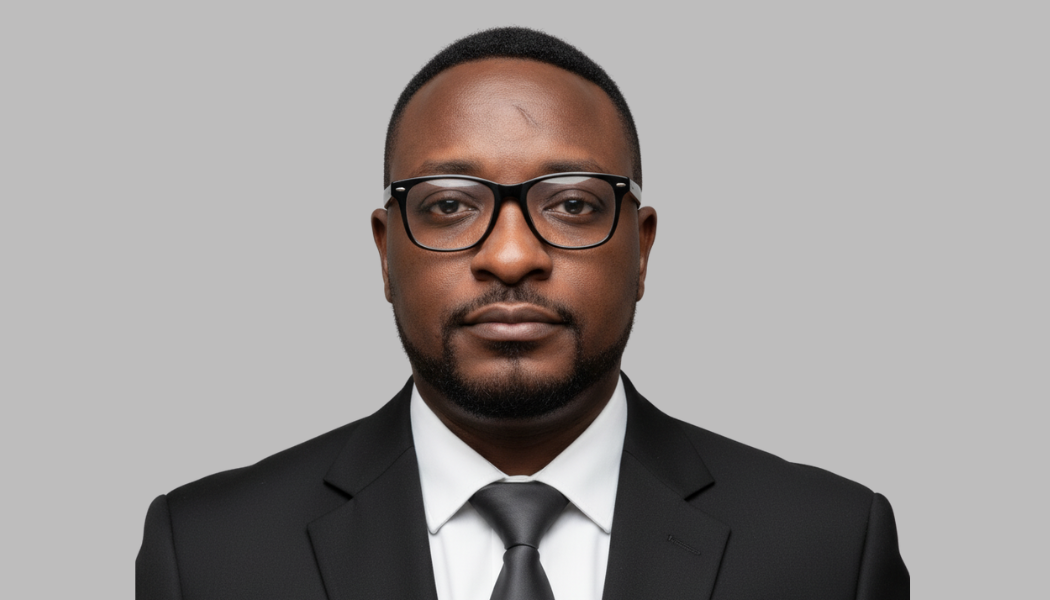
Minutes after the final applause faded at the TechQuest International Awards Conference 2023, one name was still being repeated in quiet conversations across the hall: Mr. Oludayo Sofoluwe.
He had just been announced as the winner of the TechQuest Sustainable Energy Innovation Award 2023, a category that sits at the heart of the platform’s vision for responsible, future-ready energy systems. Selected from a pool of 15 nominees and ranked among the top 10 recognised winners after meeting the full judging criteria, his recognition felt less like a surprise and more like a confirmation of work that has been steady, disciplined, and deeply rooted in real field experience.
For many in the energy and engineering community, the announcement put a spotlight on a professional whose contribution is often felt more in control rooms, offshore campaigns, and technical meetings than in public spaces. Tonight, his name moved from technical reports and internal project updates to the centre of a stage that celebrates sustainable impact in practical, measurable terms.
What this award signals is very simple: serious innovation in sustainable energy is not only about new devices or emerging buzzwords, it is also about the people who quietly re-shape how existing systems are designed, maintained, and operated so that they become safer, cleaner, and more reliable over time. That is where Oludayo Sofoluwe stands out.
To understand why the TechQuest jury aligned around his name, it helps to look closely at the path he has taken in the energy sector.
Mr. Oludayo Sofoluwe is an experienced energy professional whose career spans offshore oil and gas, subsea systems, and field operations. Over the years, he has built a reputation for turning complex engineering problems into clear, workable solutions that keep production steady and people safe.
At TotalEnergies in Nigeria, he has played a central role in subsea operations, first by supporting offshore activities directly, then by leading major commissioning work on deepwater production systems, and later by managing subsea maintenance and life of field operations. In these positions, he has coordinated interventions on the seabed, guided teams through demanding offshore campaigns, and provided technical support for both existing assets and new projects. His work has helped resolve serious integrity issues, improve reliability, and extend the useful life of critical equipment.
Before his leadership responsibilities in subsea maintenance, he developed a wide base of experience across the value chain. He has worked as a subsea support engineer, a facilities and petroleum engineer, a reservoir engineer, and a projects and facility engineer. He has been involved in well hook ups, pipelines, process facility upgrades, gas lift systems, and field development studies. This combination of hands-on field work and project oversight gives him a rare end to end view of how energy projects are conceived, built, and kept running.
He holds a degree in Mechanical Engineering from the University of Ilorin and a master’s degree in Petroleum Engineering from Heriot Watt University in the United Kingdom.
Beyond his technical skills, colleagues know him for his calm leadership, clear communication, and steady focus on safety and performance. By aligning people, processes, and technology around practical solutions, he continues to shape more reliable offshore operations and contributes to a stronger, more resilient energy sector that serves both industry needs and wider societal needs.
That professional journey, built step by step across different roles and responsibilities, explains why tonight’s recognition carries weight. It is not built on a single moment, it is the outcome of years spent working at the intersection of engineering detail, operational pressure, and long term asset performance.
One of the notable threads in his recent journey is his work on the other side of the table as a judge at the BAT Hackathon in 2022, hosted by Bridge Africa Technologies during the BAT Awards and Annual Conference.
At that hackathon, Mr. Sofoluwe served as a judge in three technically demanding categories: Offshore Engineering and Subsea Operations Innovation, Energy Systems Optimization and Production Efficiency, and Safety, Asset Integrity, and Engineering Risk Management. These are not ceremonial titles. They are areas that require a deep understanding of how offshore operations function under real constraints, where any oversight can quickly translate into operational risk or financial loss.
During the event, he evaluated projects that attempted to tackle real industry problems: how to plan safer subsea interventions, how to tune systems for better output with lower downtime, how to manage integrity risks across complex offshore assets. His feedback to teams drew on years of dealing with similar challenges in live environments. Colleagues recall how he asked direct, precise questions that forced participants to think beyond slides and prototypes and to consider how their ideas would behave in the field, under pressure, with incomplete information and strict safety expectations.
His contributions during the hackathon demonstrated his authority and depth in these fields. That experience did not just validate his expertise, it also showed his ability to assess innovation in a structured way: weighing feasibility, sustainability, operational readiness, and long term impact.
The link to TechQuest’s Sustainable Energy Innovation Award is clear. The same lens he used at BAT to judge offshore and energy optimisation projects is the lens through which his own work has been quietly judged by peers and, now, by the TechQuest jury.
How his work advances sustainable energy in practice
Sustainable energy often gets framed in terms of new fuels, new technologies, or new policy frameworks. Yet the reality in many operations is that sustainability also lives in decisions about how existing fields are developed, how subsea assets are maintained, and how risks are managed over the life of an offshore project.
Here is the thing: if subsea equipment fails frequently, if integrity problems are left unresolved, or if maintenance is reactive rather than strategic, then energy systems naturally drift toward waste, higher emissions, and higher risk. On the other hand, when offshore and subsea operations are carefully planned, monitored, and maintained, they support cleaner, safer, and more efficient production, even within conventional energy settings.
This is the space where Mr. Sofoluwe’s work has made a clear mark.
His leadership in subsea maintenance and life of field operations has helped extend the useful life of critical equipment, which directly reduces the need for premature replacements and large scale interventions. When intervention campaigns are required, his experience in coordinating seabed operations means that activities are planned with safety, efficiency, and risk reduction at the forefront.
By solving integrity issues early and strengthening reliability, he contributes to systems that require fewer emergency responses, experience less unplanned downtime, and operate within safer performance envelopes. Less downtime and fewer failures often translate into lower flaring incidents, more stable production profiles, and more efficient use of installed capacity, all of which align with sustainability objectives.
His background across facilities, reservoir, and project engineering also matters. Because he understands how wells are hooked up, how pipelines behave, how process facilities respond to different operating conditions, and how field development choices play out over time, he is able to see the broader impact of maintenance and operational decisions. That end to end understanding is critical when the goal is not just to keep the system running, but to keep it running in a way that respects people, the environment, and long term resource stewardship.
Connecting daily decisions to long term sustainability
The TechQuest Sustainable Energy Innovation Award is not designed for theoretical ideas alone. It targets individuals whose work helps real systems move closer to the standard that the future demands: safer, cleaner, more resilient operations.
In that context, the reasoning behind his selection is straightforward.
Mr. Oludayo Sofoluwe deserves the TechQuest Sustainable Energy Innovation Award for the way he applies real field experience to strengthen safer, cleaner, and more efficient offshore operations. His work in subsea maintenance, deepwater commissioning, and asset integrity has consistently supported energy systems that run with fewer risks, less waste, and higher reliability. He has led teams through critical interventions, refined operational processes, and championed practical improvements that reduce downtime and support responsible resource use.
What sets his contribution apart is his ability to connect daily engineering decisions with long term sustainability goals. By improving how offshore assets are maintained and how field operations respond to technical challenges, he helps create an environment where energy production is dependable and aligned with modern sustainability expectations. His work reflects the spirit of the award, which recognizes individuals whose leadership strengthens the future of energy operations.
Judges at TechQuest noted the coherence between his track record and the core sustainability criteria for the award. They saw a professional who does not treat sustainability as a separate agenda, but as an outcome of disciplined engineering, honest risk assessment, and continuous improvement in the way assets are designed, operated, and maintained.
In a sector where choices about maintenance scheduling, inspection priorities, and integrity management can have direct environmental consequences, that approach carries real weight.
A model of leadership for the next generation
Beyond technical competence, this recognition also speaks to the kind of leadership that the energy industry needs as it navigates a long and complex transition.
Colleagues consistently describe Mr. Sofoluwe as calm in the face of operational pressure, clear in his communication, and firm on safety standards. Offshore teams, project managers, and technical staff are more likely to embrace sustainability minded changes when they are guided by someone who has deep field credibility and a practical mindset.
By aligning people, processes, and technology around realistic solutions rather than slogans, he shows that sustainability is not an abstract ideal. It is the result of thousands of decisions taken over the life of a field: which problem to tackle first, which risk to reduce, which procedure to improve, which lessons to carry into the next campaign.
For young engineers looking up at the industry, his journey sends a signal. You do not need to be the loudest person in the room to shape the future of energy. You need solid training, a willingness to learn across disciplines, the patience to understand how systems behave over time, and the discipline to keep safety and performance at the centre of your work.
It is this blend of depth, steadiness, and impact that TechQuest chose to spotlight with the Sustainable Energy Innovation Award.
TechQuest 2024: a call to the next wave of innovators
As the 2023 conference draws to a close, the attention naturally begins to shift to what comes next. The conversations that followed his award were not only about his story, they were also about the wider ecosystem that TechQuest is trying to support across Africa and beyond.
For innovators, researchers, engineers, and students, tonight’s announcement sends an important message. TechQuest is not only looking for headline ideas, it is actively seeking work that can survive contact with real operating conditions: ideas that factor in safety, integrity, resource efficiency, and long term environmental responsibility.
Prospective participants for TechQuest 2024 would do well to study stories like that of Mr. Oludayo Sofoluwe. His recognition shows that careful work on maintenance strategies, reliability improvements, and responsible field operations can stand side by side with more visible forms of innovation. If a solution makes energy systems safer, cleaner, and more dependable in practice, it belongs on the TechQuest stage.
Teams preparing for the next edition are encouraged to start early: to refine their concepts, validate assumptions with real data, involve field practitioners where possible, and think seriously about implementation. Whether they are working on digital tools for asset integrity, new approaches to emissions reduction in existing facilities, or improved models for managing offshore risks, the bar has now been set clearly.
The closing moments of the ceremony captured that forward looking spirit. As Mr. Sofoluwe received his plaque and posed for photographs, the applause was not only for what he has already done, it was also for what his example represents. A reminder that sustainable energy innovation is not a distant idea. It is already being built, one decision at a time, in control rooms, offshore platforms, subsea interventions, and technical teams across the industry.
TechQuest will return in 2024 with a new set of nominees, new projects, and new debates. The hope is that many of those who watched this year, either in person or online, will move from the audience to the arena, bringing forward work that, like his, connects engineering excellence with sustainable outcomes.
For now, the spotlight rests on Mr. Oludayo Sofoluwe, winner of the TechQuest Sustainable Energy Innovation Award 2023, whose steady contribution reminds the sector that the future of energy will be shaped not only by new sources of power, but by the quiet, deliberate work of those who make existing systems safer, cleaner, and more resilient for everyone.
