


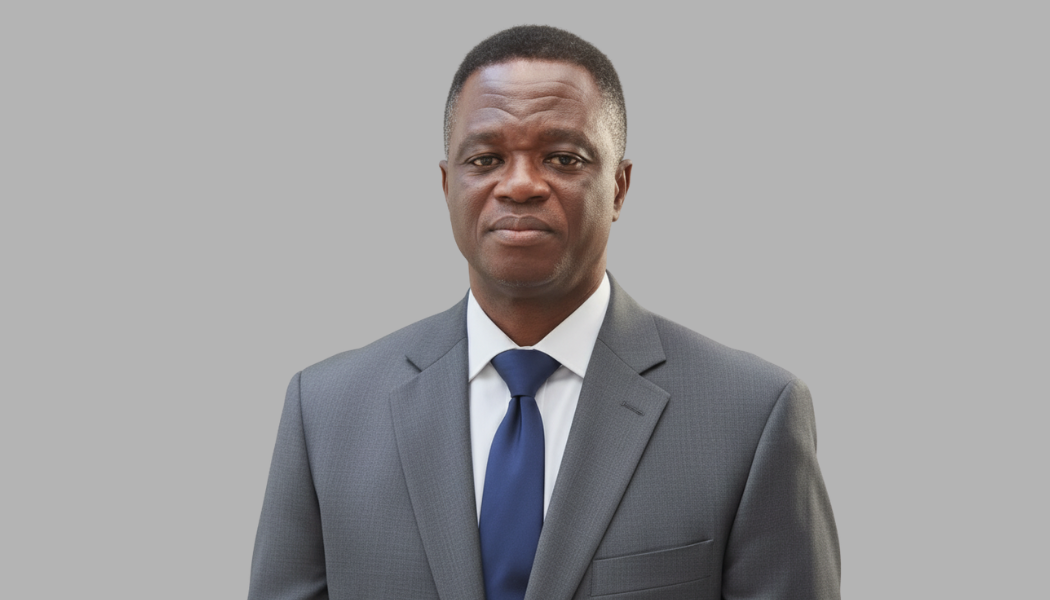
The Techquest International Conference 2023 concluded with a renewed focus on digital learning, data driven teaching models, and the essential role educators continue to play in shaping practical knowledge for students. One of the major highlights of the conference was the announcement of the winners of the TechQuest Innovation in Digital Learning Award 2023. Among the 15 nominees evaluated this year, Mr. Samuel Darkey Ofori emerged as one of the top 10 recognised winners after meeting every judging criterion with a profile rooted in consistent service, instructional depth, and clear evidence of digital learning impact.
The award celebrates individuals who have advanced digital learning practice in measurable and meaningful ways. Mr. Ofori’s work reflects this responsibility with clarity. His contributions demonstrate what it means to guide students with intention, blend traditional teaching with useful technology, and build confidence in learners who often assume that mathematics is beyond their reach. His recognition at the conference places him among educators shaping the current conversation about the practical application of digital tools in the classroom.
This year’s selection process placed strong emphasis on clarity of instructional outcomes, innovation in teaching practice, digital learning integration, student engagement results, and professional contributions beyond the classroom. The judges reported a competitive field of committed educators and technologists, yet Mr. Ofori’s record stood out because his results flowed from sustained, day to day work rather than short term projects. The award therefore affirms a steady educator whose influence is both measurable and grounded in accessible classroom practice.
A Professional Path Shaped by Consistent Mathematics Instruction
To understand the weight of this recognition, it is useful to examine the path that led Mr. Ofori to this point. His career began in Ghana, shaped by a firm belief that mathematics can be understood by any student when taught with patience, structure, and clarity. After earning a degree in Mathematics Education, he began his professional journey at Dorfor Senior School, where his early classroom years set the tone for his approach. He built lessons that focused on breaking complex topics into smaller conceptual steps that students could follow, encouraging improvement through repeated practice and clear explanation.
At Dorfor Senior School, he worked with students at different academic levels, guiding them through basic algebra, geometry foundations, problem solving strategies, and more challenging topics that often intimidate secondary school learners. His method relied on simplicity, steady reinforcement, and the belief that progress grows from consistency rather than speed. Many of his early students reported stronger performance in examinations because of this pattern of instruction.
Those early years shaped his professional identity. His role extended beyond delivering content. He became a mentor figure for students who felt uncertain about their ability to handle mathematics. He used approachable language, designed exercises that allowed learners to build confidence, and helped them develop problem solving habits that would remain useful long after their examinations.
After relocating to the United States, he continued the same trajectory without losing the foundational ideas that defined his work. At Lancaster High School in South Carolina, he teaches Algebra, Geometry, and Pre Calculus. His approach has remained consistent but has expanded to incorporate digital tools that support varied learning needs. His work in this environment reflects a practical blend of traditional teaching and structured technology use.
His colleagues describe him as a calm professional who prioritises clarity. His students often mention that his lessons make complex ideas feel manageable. This is not achieved through shortcuts but through careful sequencing, real world examples, guided practice, and a commitment to understanding where each learner’s difficulties begin.
He also contributes meaningfully to professional learning communities in his school, participates in departmental conversations on instructional improvement, and supports peers through collaborative planning. Beyond his immediate school environment, he remains connected to broader professional communities. He is a member of the National Council of Teachers of Mathematics and the Association for Supervision and Curriculum Development. These affiliations keep him engaged with new research, evolving classroom practices, and conversations about teaching models in mathematics education.
Across every stage of his career, the focus has remained the same. He teaches mathematics as a practical subject that every student can grasp with the right structure, the right tools, and the right environment. This straightforward commitment forms the foundation of his digital learning excellence.
Digital Learning as a Practical Tool for Accessible Mathematics
The TechQuest Innovation in Digital Learning Award recognises individuals whose work demonstrates thoughtful integration of digital tools in ways that improve learning outcomes. In this area, Mr. Ofori has established a clear record. His use of digital platforms such as Desmos, GeoGebra, Google Classroom, and Kahoot shows a deliberate effort to make mathematics more interactive and accessible while supporting students with different learning needs.
In his current classrooms, digital learning is not treated as a trend. It is applied as a practical extension of traditional teaching. For example, Desmos is used to help students visualise algebraic relationships, functions, and graphs in a way that reduces misconceptions and encourages exploration. GeoGebra provides a hands on environment where geometry concepts can be manipulated, tested, and observed. These digital platforms help ensure that learners who struggle with abstract concepts can see mathematical ideas unfold visually, which strengthens understanding.
Google Classroom allows him to organise lessons, guide revisions, share resources, and provide timely feedback. This structure improves communication and helps students manage their work more efficiently. Kahoot supports quick checks for understanding and adds varied opportunities for engagement, especially for learners who respond better to interactive and collaborative tasks.
This combination of platforms forms part of a broader instructional pattern. He differentiates lessons for advanced learners who require deeper challenges, while providing supportive scaffolds for those who need more step by step guidance. Digital learning tools make this balance easier to maintain because they allow him to customise activities, track progress, and respond to gaps as they appear.
His integration of digital tools also contributes to stronger learning outcomes. Students show better engagement, clearer conceptual understanding, and improved retention of topics. This is important because the goal of digital learning is not to replace teachers but to strengthen the quality of instruction, expand the range of methods available, and support learners more effectively.
In the context of the TechQuest Award, this record aligns closely with the indicators for innovation in digital learning. It shows thoughtful planning, measurable impact, and a long term commitment to improving mathematics instruction through practical technology use.
Why He Excelled: Meeting Every Judging Criterion With Clear Evidence
The 2023 judging process required nominees to demonstrate measurable contributions to digital learning, evidence of instructional effectiveness, innovation in practice, professional participation, and commitment to learner success. According to the committee, Mr. Ofori met these expectations in every category and distinguished himself through sustained results rather than momentary achievements.
Several factors contributed to his placement among the top 10 recognised winners.
First, his work shows clear alignment between digital tools and instructional goals. He does not use technology for novelty. He integrates it for clarity, reinforcement, and differentiated learning. This practical application reflects the kind of innovation the TechQuest Award seeks to acknowledge.
Second, he demonstrates a measurable impact on learners. His students perform well in examinations, report increased confidence, and show stronger problem solving habits. These outcomes reflect a direct connection between his teaching methods and student progress.
Third, his participation in professional communities shows sustained engagement with the wider educational field. His memberships in NCTM and ASCD reflect a commitment to ongoing learning, professional ethics, and instructional development.
Fourth, his teaching practice strengthens access to mathematics for diverse learners. He provides structured support to students who need additional guidance while offering extended opportunities to advanced learners. The judges noted that this balanced approach reflects the inclusive intent of digital learning innovation.
Finally, his career narrative shows steady growth. From his work in Ghana to his contributions in the United States, he has maintained the same focus on clarity, accessibility, and student centred instruction. This continuity demonstrates a level of professionalism that aligns with the standards of the TechQuest Award.
The Significance of the Award Within Techquest’s Educational Mission
The TechQuest Innovation in Digital Learning Award reflects Techquest’s broader commitment to recognising educators who shape practical and forward looking approaches to teaching. Digital learning has become central to modern education, and the responsibility of educators is expanding rapidly. The award therefore celebrates individuals who demonstrate that technology can be integrated with purpose, not as a distraction but as a structured tool for improving understanding.
By acknowledging educators like Mr. Ofori, Techquest reinforces its position as a platform committed to promoting practical innovation across Africa and the global educational community. The award also highlights the value of mathematics education as a field that benefits significantly from digital tools. Visualization, interactive modelling, and personalised learning are essential for helping students see mathematics as a subject they can engage with rather than avoid.
The significance of this award also lies in the example it sets for other educators. It encourages teachers to explore tools that can strengthen learning outcomes and design methods that respond to students’ needs in clear and flexible ways. It highlights the importance of steady improvement rather than rapid shifts, emphasising that innovation often grows from consistency, observation, and structured classroom practice.
A Forward Looking Call to Innovators for the 2024 Edition
With the 2023 edition concluded, Techest extends an open invitation to educators, EdTech specialists, curriculum designers, researchers, and digital learning innovators to prepare for the 2024 cycle. The next edition will focus even more strongly on practical digital strategies that demonstrate measurable improvements in learning outcomes.
Innovators who intend to participate are encouraged to document their work throughout the year, gather evidence of student progress, refine their digital learning approaches, and remain connected to professional networks that advance instructional excellence. The 2024 edition will continue to reward clarity, impact, and structured innovation.
Techquest aims to build a community of educators who use technology not as an accessory but as a tool for meaningful learning. The recognition of professionals like Mr. Ofori should encourage more individuals and institutions to showcase effective classroom models and contribute to the collective growth of the educational ecosystem.
Closing Reflection on His Contribution and Sustained Impact
As the conference comes to a close, the recognition of Mr. Samuel Darkey Ofori stands as a reminder of the importance of educators who commit themselves to steady, student centred teaching. His work reflects a balance of traditional instruction, digital tools, and practical strategies that help students see mathematics in a new light. His impact is not defined by dramatic transformation but by consistent improvement, clear explanation, and the simple idea that every student can understand mathematics with the right support.
His contribution to digital learning is marked by structure, clarity, and intentional use of tools that make complex ideas accessible. He continues to shape learning environments where students feel confident, engaged, and prepared to tackle new challenges. This approach aligns directly with the spirit of the TechQuest Innovation in Digital Learning Award.
For the broader educational community, his recognition serves as an example of what thoughtful instructional practice can achieve. It reinforces the idea that innovation is not limited to large scale technology deployments. It can also be built into the everyday decisions educators make to support their learners.
Techquest’s decision to honour him this year reflects a broader message. Digital learning is most powerful when applied with purpose. Mathematics education becomes more meaningful when taught with clarity. Students thrive when teachers believe in their potential and provide the tools they need to succeed.
Mr. Ofori embodies these principles. His work continues to influence classrooms, shape learning habits, and support students who might otherwise struggle with mathematics. His recognition at the Techquest International Conference 2023 celebrates not only his achievements but also the wider vision of an educational system strengthened by practical digital innovation.
